Showing posts with label travel stories. Show all posts

May 8, 2012

April Photo Collection: Tripping Through The South

I recently went on a stellar road trip through the South. Besides slaking my general thirst for travel, it allowed me to flirt with my ever-growing love of the South. When I was a kid, I moved from D.C. to Northern Virginia. When friends would tease me about the fact that I was now Southern, I would grow very grave and maudlin. "I am NOT A Southerner," I'd say. As if being Southern were akin to having shingles. I don't know what that was about; now, I like the South a lot. I like that it has retained so much local flavor and cultural heritage. I like that people say hello to strangers instead of assuming they want to mug you.

Here are some trip highlights, photo montage style.

The view over our first morning's coffee in Atlanta, Georgia.
Spanish moss in one of Savannah, Georgia's many squares. I love this stuff!

A fantastically crowded second-hand bookstore in Savannah. Hello, lover. 
Tori and I discovering sweet tea vodka in Charleston, SC (and looking a little bit devilish)
Outside our B&B in Charleston. The whole city smelled like this Confederate jasmine, which was, in a word, glorious.

Sitting in our garden patio on our second morning in Charleston. 

Our boat ride through the amazing Cypress Gardens, SC. For five bucks you get to paddle yourself around a stunning swamp and wave to the alligators!

This swampy smelled quite nice. The water's black because of all the tanins, but when you stuck your hand in it, it was actually quite clear. 

Something happens to me when I am behind my camera. I decide that whatever I'm  shooting isn't actually a threat to me. So despite Tori's protests about toothy grins and that whole "don't bait the gators" rule, I convinced her to paddle up to it. We started out this close...

...and ended up this close. Actually, this is as close as we got before I dropped my camera and we ran into its log. Now I know what an angry, hissing gator looks like. Whoops.

April 15, 2012

Oh hi, World.

I have been April's worst. Blogger. Ever. But I have been doing a lot of two things I love: writing and traveling. I'm a little too fried for thought-provoking posting, so I'm going to let this video do the talking for me. It's everything I love about travel, and everything a travel narrative should be: moving, exciting, inspiring.

Here's to making life an adventure.


MOVE from Rick Mereki on Vimeo.

August 25, 2011

Epic Road Trip: Tasmania


I've been travelling a lot lately - some fun, some not so fun. Let's talk about the fun stuff.

When I started researching my Masters thesis on the use of creative writing techniques in travel writing (for this read: excuse to read travel articles all day), I read something by Matthew Power about hiking the Overland Track in Tasmania. His story about the five-day hike, and the beauteous place that is this crazy island, made me fall in love with Tasmania instantly and permanently. Power talked about Lords of the Rings-style rainforest with dripping moss, moody skies, and jagged rocks. I found all that and so much more.

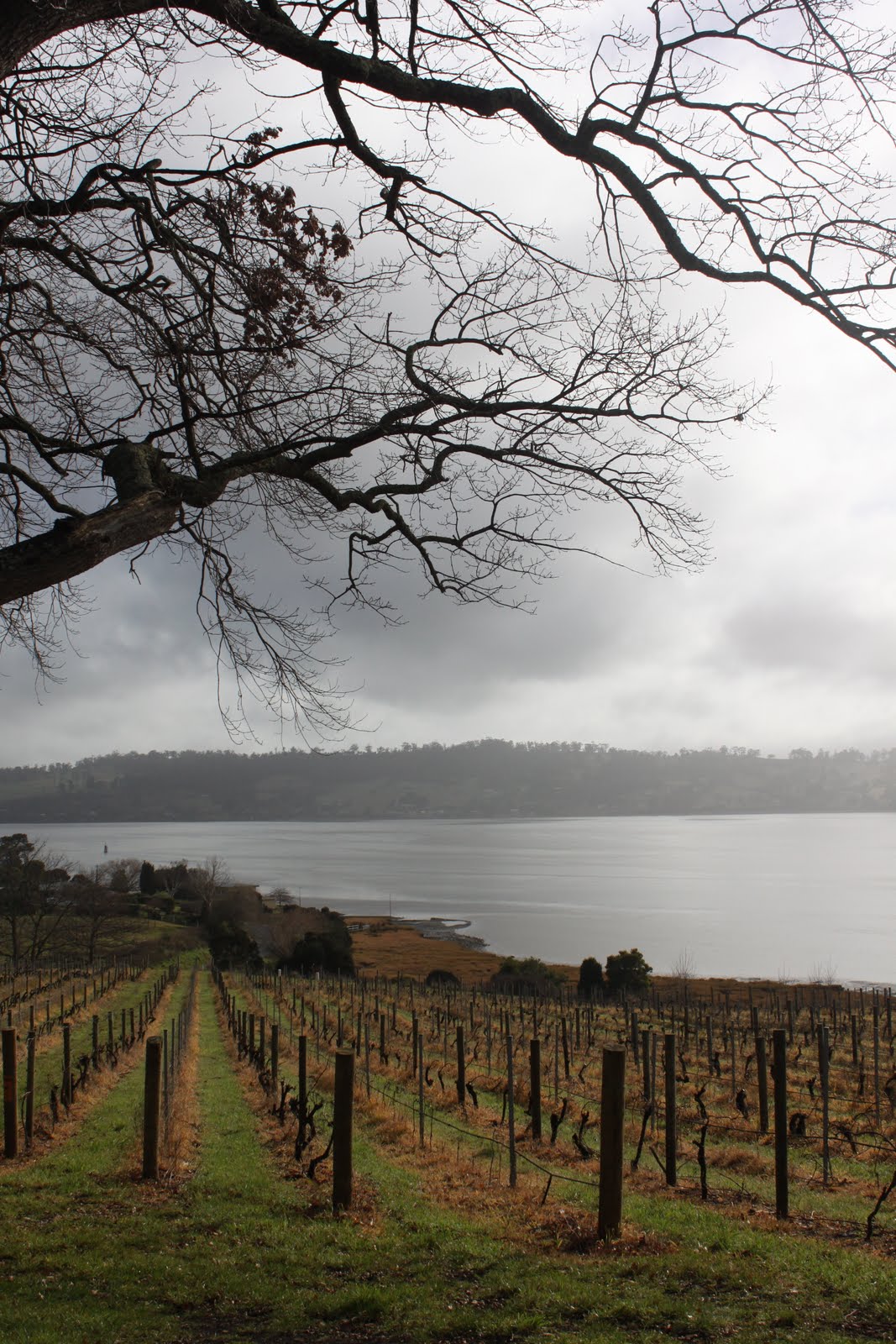
We decided to take our car over by ferry, which put us on the northern end of the island. For those of you unfamiliar with this part of the world, Tasmania is an Australian state located under the southeastern tip - it's on the same longitude as New Zealand, so we're talking lots of rain and semi-deciduous seasons as well as rainforests and nice beaches. Tasmania is known for its wilderness, but also for its produce and wines. So we decided to try and find some open wineries around Launceston - not ideal in winter. But we finally struck gold with Pipers Brook Winery, where we had some amazing whites and a pretty decent view.

We felt fancy, even though we were wearing raincoats.


And then we drove east to the Bay of Fires and camped out by the beach. This place was pure magic. The beaches are ringed with speckled boulders covered in bright red lichen, making them look like they've been stained with blood. As soon as we pulled up I was out of the car and taking these:

I don't actually know why the algae is red, but it lights up and glows when the sun falls on it. We set up camp in a bushy alcove and spent the night happily sitting by the fire eating sausages. There was a very brave wallaby who quite literally sat with us through dinner (and picked through our trash). They're notoriously shy, so this was a little weird. Especially when he sat creepily behind my chair and made scratchy noises, which I came him a talking to for. Not that he cared: he blinked at me and stayed where he was.


Then it was off into the historic center of the country for what we decided we needed: a little non-camping time. We stayed in the beautiful, tiny town of Ross in a heritage cottage:


It involved a log fire, a cute local tavern for dinners, and one of the oldest convict-built bridges in Tasmania. While the convict part's a little sad, the bridge itself is pretty impressive. At least Tasmania hasn't swept its colonial past under the underbrush like the rest of Australia, and I have to say I think it's better for it.

Then we wound through wilderness up into Cradle Mountain NP. We stayed at a pretty amazing Lodge were we got amazing massages, gourmet meals, and another log fire/king bed experience. But what we really went for was to hike through this:


This day of hiking was challenging, blissful, and the highlight of Tasmania for me. I couldn't believe I was finally standing on the Overland Track, the track I'd lusted after for so long. We even got to follow a wombat for a while, who was ambling down the boardwalk in front of us. The weather was kind to us, and as a result I had several of those moments of awe that you only get when surrounded by a natural setting so magnificent that you know you'll never be able to describe it. So I took lots of photos instead.

Tasmania is an amazing blend of good things: unspoiled wilderness, friendly people, sparkling coastline, good food and wine, and cosy country towns (to name a few).

It might be considered the end of the earth, but that only makes what you find there that much more outstanding.


October 8, 2010

24 hours in Sydney


Ah, traveling. How I've missed you.

I recently had the opportunity to hop down to Sydney for a day and night. Sydney's pretty close to Brisbane - I think the flight is an hour and a bit - but you can taste the difference in the air. And feel it (I actually got to wear a light jacket! Glorious!).

I've been to Sydney before and have to say that, while I enjoyed it, I found the atmosphere a little... dare I say it... snooty. OK Sydney, we get it - you're fabulous. No need to get all pretentious about it. So it was nice to have another pass at this sunny, beautiful city and come away with a better impression.

I went to a restaurant called Bodega, a tapas bar tucked away from the water. When the cabbie pulled into a dark, pedestrian-looking street I was a little concerned about this restaurant's dodgy-factor, but I needn't have been. The place was high quality without that 'look at me I'm so pretty' vibe I've come to associate with stylish Sydney restaurants. The place was tiny, vibrant, full of colour and laughter. We sat at the bar and had the best Spanish wine I've ever tasted (and that now I can't remember the name of, damn me). We watched the pierced, waxed and tattooed staff do things to fish and chicken I've never seen done before in giant cast iron pans. We ate massive oysters, fancy fish fingers, and succulent spatchcock that fell off the bone. For dessert, we had affogatos. I can't emphasize how in love with this dessert I am. Creamy vanilla ice cream smothered with a shot of espresso and another of port? I'm appalled that I haven't discovered this before.

The next day I wandered the city on foot, visiting all those very Sydney icons and watching people go about their business. I braved the steely skies and took a walk through St James Park, where a man was making massive bubbles big enough to fit a group of schoolchildren in.


I walked through the Botanic Gardens, which are extensive and lovely and filled with funny-looking birds and bats that hang from tree limbs like giant seed pods.


(Batlets!) -->

I laughed when I saw an actual sign that read: 'Don't feed the birds, they bite' as it exactly described my Dad's very first day in Sydney. Yes, Dad. The signs ARE there for a reason.
I walked Sydney Harbour and around the base of the Sydney Harbour Bridge. I took a stroll around The Rocks, a historic town section around the harbour, which had a farmer's market on. I treated myself to a fancy lunch at a wine bar.
I had another affogato and I did not regret it.


(Historic Governor's House)


(Sydney Harbour Bridge from the Opera House)


(SHB from the edge of The Rocks)


(The Opera House)


(Me, happy)


There's nothing like a day away to brighten the spirits and make you feel like you're actually living. Thanks, Sydney - I needed that.

October 2, 2010

A Tribute to Fall

I'm really missing the good old USA, as I do every year around this time.

(Burnside Bridge, Antietam, 2008)

(Antietam Battlefield, 2008)

It's funny how nostalgic we get about our place of origin when we are no longer there to hate on it and tell it it's boring. And oh, how nostalgic I get. About the riot of color as leaves start to die, the pervasive smell of burning wood, new school supplies, pumpkin-flavored things. Leaf crunching opportunities. It's almost too much.

... which is why, when a fantastically glorious friend sends me a VAT of Starbucks pumpkin spice syrup (definitely not meant to be sold as retail, but my little Brown beauty has tricks up her sleeve), I get a little overwhelmed. See?


So here's a little something I wrote after my travels in Europe about leaves and change and... well, coming home. Happy Fall, everybody. I'll be home soon.

A Dying Season

Most of my childhood travel memories are overcast by nausea. It always rose quickly during my family’s drives through the Blue Ridge Mountains. I'd ride the s-bends with my fingers stuck out the window, green face reflected in the bug-smeared glass. But even between bouts of Dramamine-induced coma, I remember the scenery clearly. As we wound through the mountains, past the multi-layered rock shelves speckled with moss, we would all grow quiet, captured by Virginia's autumn foliage. Nature's dying season would sneak up on us when we weren't paying attention - first in yellow hazard yellow bursts between boughs, then a sprinkling of pale pink and ochre. Then Fall would smother us in one fluid motion, trees exploding as if on fire. The leaves shouted through the silence, cut only by Lyle Lovett crooning through our car's speakers.

Being a child of the temperate world, I was used to the wonders of seasonal changes: the smell of snow approaching, the feel of new leaves between fingertips. Even so, every year at my great uncle's farm in the mountains, I would lie beneath the trees staring up in eternal awe at sharp outlines of yellow leaves against blue sky. Fall's colors captured me in a way the other seasons didn't. When I went to college on Virginia's coast, good autumn foliage seemed to get harder to find. The season seemed to have grown inexpressive with the passing of time, which made me sad, because I needed the season. Adult cares were heaping themselves upon me, and change was becoming a frightening thing. I started to wonder if I'd dreamed those brilliant farmhouse days. My Fall exhilaration was fading as the leaves did: quickly and dispassionately along the overpopulated highways.

It was October 2006 when I arrived in Switzerland seeking refuge. It was my first trip to Europe, to which I fled to escape the change that had been ravaging my life. Interlaken may be a small town, but it boasts a long and impressive list of death-defying activities. I was happy to stick to the dangerous realm of Scootering, which was daring enough to satisfy me. But when a good-looking Australian offer to take you paragliding, it's kind of impossible to say no. Compared to canyon jumping, it seemed like a safe bet. Our van ride up the mountain was like one of my family's Blue Ridge trip on amphetamines. As we screeched around our sixth or seventh blind curve somewhere near the speed of sound, I began to wonder what I'd gotten myself into. And if I was destined to puke in the good-looking Australian's lap. Once we'd reached our destination, though, I was ready to soak in the scenery. So when Andy, the overexcited Swede strapped to my back, told me to run down the very steep hill towards the tree line, it seemed like the right thing to do. That was before I felt our collective weight being bounced around as our parachute opened and my legs barely missed the tops of the pine trees. I am no fan of heights, a fact I only remembered once my feet were thirty feet above the ground. The cold air pressed against my fearful heart.

Then, it happened: suddenly I was flying over the foliage of my childhood. Lake Brienz, a cerulean blue diamond glistening before us, was crested by a world set on fire. There were the waves of yellow, spotted and flecked with russet and burnt orange and flushed pink. Each leaf was its own revolution, rioting alongside its compatriots, streaming together while standing alone. Up there, surrounded by the most significant of nature's changes, it hit me: that thing that had always captured me about Fall's changes. Autumn always showed me that life's transitions shouldn't be a source of fear. Times of change hold a beauty all their own, filled with untrodden pathways, chances for us to grow and explore. Change allows us to open our eyes, stop looking ahead or behind, and enjoy the thrill and novelty of simply being alive.


I think the peace I found in those farmhouse days, and that moment in the Swiss Alps, had to do with much more than the beauty of the seasons. Though they were temporary, and always will be, they held a hint of the eternal. They helped to make my childhood feel unhurried. They allow me to return to it still, to rest in the understanding that the process of changing, in nature and in life, is a beautiful thing with the potential to reveal to us the most beautiful parts of ourselves. How strange to stumble back onto that knowledge so far from the mountains of my youth. How lucky.


May 24, 2010

Someone Ate My May

... it's been three weeks since I last blogged?.... really? My calendar must be lying to me. I'm almost three months into my first big-girl editing gig and I'm STILL struggling to 'find the time'. Granted, my editor decided to go and have babies a week and a half ago, leaving me to pretend to know what I'm doing at her desk. But I mean really- where are all of these days going? I'm feeling slightly swallowed alive. (I am alive, by the way, dear friends whom I haven't spoken to in many weeks but that I love deeply.)

I could bore you with more complaints about full-time employ, but I think I'll tell you about my new camera instead.

I bought my first SLR yesterday! It's a Canon Rebel T1i 500d, the first digital camera I've invested in that hasn't just been point-and-shoot. I've always loved taking pictures. I took a photography class in high school that has always stayed with me. I loved going out and exploring through a lens, then watching the photos take shape beneath my hands. My teacher was a little old lady who really liked photos of puppies. Most of my pictures were of old headstones. She wasn't a fan.

Since I started traveling, I've found myself wanting a camera that could do... well, more. I can't tell you how many times in the past few years I've taken a picture of a breathtaking vista, looked at my camera's screen and gone, "You just don't quite get it." I'm working my way through the manual (Moby Dick, anyone?) and am looking forward to learning the manual settings as I go. Here are a couple of the practice shots I've taken:


Brisbane as seen from the Cliffs at Kangaroo Point.

Manfriend looking model-y.

Lilies from Manfriend in dim lighting.

I'm AMAZED by the difference in quality. These were photos I shot on automatic settings without knowing what I was doing, and I still think they turned out pretty OK. The camera shoots hi-res video, too, so maybe you'll even get to suffer through a video montage of me doing something silly in the not-far-distant future. Who knows? More to come!

April 3, 2010

3 Days in Melbourne

I just spent three days in Melbourne, and I have to tell you: I'm a big fan.

Melbourne, which is (I'm halfway sure) Australia's biggest city and which (I know) is the country's literary capital, is stylish and cool in a wonderfully grungy way. Imagine that the
cities of Australia's East Coast were all sisters: Brisbane would be the cute one with no shoes on who occasionally talked too loud (and picked her wedgies in public), but that always held doors open for strangers. Sydney would be (this is just my opinion, now- go easy) the well-dressed corporate snob whose hair was pulled back way too tight.

Melbourne would be the super cool one, the one who manages to look effortlessly chic in Converse low-tops and a tight black t-shirt with holes. The one with a chunky ring on each finger and pink tips in her hair. In short, the one I wanted to be at several intervals.

Melbourne is a city filled with tiny little back alleys that aren't scary or (from the perspective of a DC girl) at all alley-like, other than the fact that they are narrow and smeared with graffiti. There are hundreds of amazing underground restaurants in these back alleys, all of which are waaaaay too cool to advertise. They don't even have signs on their doors. Some of them don't have doors. You have to push aside dumpsters and uncover manholes just to find them (OK, not really. But seriously!). It's a great place to browse in funky bookstores, drink coffee served by lovable miscreants, and hang out in bars that don't feel the need to broadcast "look at us- we're cool!". Melbourne is, above all, an amazing place to wine and dine (and drink coffee- ohhhh, the coffeeeeee), which is what we did. Almost non-stop.

Here (because I can't contain myself) are some of the places that blew our minds:

We found this place by accident, and it was one of the only places that was open the whole weekend long. It's a tiny place, half of which is filled with a wood-fire oven decorated with a beautiful mosaic of tiles. They served up amazing Spanish-inspired breakfast food, from bubbling omelettes in cast-iron dishes stuffed with olives and feta to corn fritters with rocket and avocado dressing. I will dream about their coffee (what is it about Melbourne coffee? Do they just take more pride in the way they make it? Do they lace it?) Plus, they were never too crowded. It felt like we'd discovered a secret.

This place is faaaaancy. Like, I paid more money on a single meal than I've ever spent in my LIFE kind of fancy. Like, folded Manfriend's dirty napkin while he was in the BATHROOM fancy. And it was worth. Every. Penny. It was billed as a modern take on Greek food, dreamed up by one of the chefs on Australia's Masterchef. Every dish took me to another plain of existence. Seriously- it was that good. We had raw tuna with frozen watermelon (don't knock it), some kind of mushroom philo thing with fresh rosemary and some ridiculous sauce, a whole de-boned flounder with slow-roasted roots vegetables. They did things to vegetables that I had never dreamed could be done. And the dessert. Listen to me! THE DESSERT: it was baklava. Except not. It came out as a giant, puffy, golden souffle still sitting in its copper saucepan. The waitress then cut into it and soured salted caramel into the centre. We were told the actual baklava was in the bottom, and to have at it. This thing was so incredibly glorious- like nothing I've ever tasted before- so exquisite that I made noises in public that no one should ever make. I almost cried. It was, outside my Mom's kitchen, the best dessert I've ever had. And it had NO chocolate in it. (Wow).

This place was tucked into one of the back alleys in the middle of the city. It made its home in a converted garage, lining itself with communal tables, thick stands of lit candles and quiet, home-style confidence. We got to enjoy food that was mostly organic and locally sourced. I got to drink organic red wine from one of the tiny High Country Victoria towns I've been writing about for the past two weeks at work, which was great. The food was so luscious; it melted in your mouth. I ate things I never eat: rabbit, mussels, fried cheese. I ate things I eat all the time that were ten times better than I knew they could be: barramundi, gnocchi. We even had fried churros with dark chocolate sauce. Heartwarming. Glor.i.ious.

I hope you all enjoyed your Easter holidays, too.

February 4, 2010

The Things We Carried

Almost a year ago, Manfriend and I went on a hiking trip. This trip, a three-day trek through New Zealand's Tongariro National Park, was supposed to be for my thesis project (at least, that's what I thought when I spent student loan money on it). I have never prepared for a trip so thoroughly. I researched the best foods to take on a days-long hike. I spent hours reading up on Kiwi mythology. I bought a pair of hiking boots. Then we walked off into the rocky wilds.
A week after we returned from said trip, my department decided it didn't want me to write travel articles about my hike, preferring that I put together a dry piece of academic nothing (because, let's face it, what is a grad degree without a certain level of frustration? We wouldn't want to make it about, say, my priorities and interests. No, no. Of course not!). But I digress...

I've decided that the time has come to sit down, whip out my notes, and write that article I so wanted to write. Here, I will share some of my thoughts as I look back on the experience. (And so I can show you my pretty, pretty pictures.)

We carried Camelbaks, thermals, candles and sunscreen. We lugged powdered drinks, prepared rice meals, cheese, salami, and cans of tuna. We carried slabs of chocolate and notebooks. More than anything else, we carried hopes that we would make it through three days and 22 miles with all of our belongings clinging to our backs.

22 miles doesn't sound like much, does it? In Tongariro, it is enough. Those 22 miles go over a rocky moonscape and around three snow-capped volcanoes, one of which served as The Lord of the Rings's Mount Doom. This park- situated in the Ruapehu District smack in the middle of the North Island- does look a lot like Mordor, but more beautiful and lush and complex. The weather is just about as dangerous.

Everyone we encountered- from the Visitor's Center staff to our hoteliers to the guy who picked us up from the airport- told us two things (with serious shakes of their heads). 1) That we were in for cold and snow, and 2) that people died somewhat regularly up in those alpine hills. Jackie, who drove us to our starting point, put it this way: "It'll be bone-chillingly cold, up there. You'll be playing the alpine game." The 'alpine game' means rapid changes in weather, fluctuating from dry heat to rain to sudden blizzard before you can think protective gloves. As we headed to the start of the trail, we felt apprehensive. We'd brought all the right gear, but did we really know enough?

Tongariro National Park is the oldest park in New Zealand; it is also the fourth national park established worldwide and has been established by UNESCO as one of the 25 mixed cultural and natural World Heritage Sites. It was given to the government by a group of native Maori people. The chief of that group, named Te Heuheu, knew it was the only way to save the land from farmers and developers. He knew that the land had to be saved, because his people believed that the three volcanoes- Tongariro, Ngauruhoe and Ruapehu- were sacred. I wanted to immerse myself in a landscape that someone found so inspiring that they gave it to the Queen.

Our first day's hike traversed the Tongariro Alpine Crossing, heralded as one of the best day hikes in New Zealand. It is one of the most exciting and most dangerous, especially for day-hikers who assume that 'day-hike' = 'relaxed hike we can do in jeans and t-shirts'. We began by hiking uphill through vast expanses of grassy terrain. The lichen and tussock grass were highlighted by purple bursts of invasive heather. The effect was a rippling expanse of otherworldly beauty that Manfriend dubbed as 'fairy mold'.


Even with other hikers flanking us, the landscape was eerily quiet. We heard nothing but wind and trickling streams carrying snow melt down into the valley behind us. We climbed up the Devil's Staircase- our first big upwards push- scrambling over black and volcanic boulders, and inching along on ledge after craggy ledge. I leaned forward to counteract the weight of my pack (I had never hiked with weight before), feeling as if I might go tumbling backwards. Before we knew it, we were tramping through snow.


We passed the North Crater, a vast expanse of snow and rock, inching around the base of our first volcano. The wind was so strong that it pushed us sideways, but we were grateful for blue skies and clear-ish weather.


We struggled upwards over blackened, shifting scree for what felt like a long time. Manfriend made sure to make time for a quick geology lesson (nerd).


Then we emerged at the top of the world.


On one side, the volcano loomed. On another, the Red Crater glistened in the sun, dropping off into a darkened abyss.


In front of us, down a long slope, were the beautiful Emerald Lakes.

The color of the lakes, which are warm and smell like rotten eggs, is due to the high concentration of minerals washed down from the Red Crater. We fairly flew down the downslope like excited children, ready to sit down and enjoy the strange sights before us.

That night we slept at Ketatahi Hut, which sat on a hill at the edge of a Maori settlement overlooking the distant Lake Taupo.

The cabin had an old-fashioned feel, with its wood-burning stove and rustic wooden tables. Because it was Easter weekend, the place was insufferably crowded- people slept in tight lines on the floor, while the rest of us did some involuntary snuggling on the rustic bunks. (The mattresses were covered with a crinkly sheeting so that every time someone turned, the noise would resonate through the whole place. 'Crinkle-crinkle-crinkle, snore, crinkle-snore.' Silence... sweet silence... then 'CRINKLE-COUGH-SNORE!')

We stayed up talking with a Kiwi couple who'd hiked this part of the trail many times. John, big and loud and gap-toothed, applauded us first-timers for how prepared we'd been. "My goal for this trip," he told us," was to make it over the Crossing without having to haul anyone else out." He told us that on every other trip, he'd had to literally go back and save someone (usually foreign). He told us about an American hiker who'd gotten trapped at the top in a blizzard. "I had to sew up a gash on his thigh myself and carry him over my shoulder," he said. We gaped at this mountain man, feeling like we'd been lucky.

The second day saw us retracing our steps and walking past the Lakes again, this time including the Blue Lake.

We descended down a difficult slope and spent most of the day walking through the strangest landscape I've ever seen.


I felt like we'd been transported to the Moon. The land turned into red-brown silt and craggy rock castles piled up towards the cloudless sky. Melting snow cracked and popped beneath our feet, echoing in the sparseness. The bone-white roots of the tussock grass reached out of the dirt like gnarled, beckoning fingers.


This was the most difficult section of trail for me. I was tired. My pack weighed about one million pounds. My feet were burning inside my shoes, begging me to lie down and be done with it. When I saw the beech forest in the distance, I felt better. Imagine walking through a craggy desolation for hours, and then seeing in front of you a line of trees so distinct that you could draw a line where the forest began.

We hiked up through cool, shady woodlands, tree limbs draped with frothy swaths of moss. The dirt beneath us gave a little as we walked on it. We cooled our aching feet in a babbling brook.

At the second Hut, we met up with the Kiwi couple and about ten other people who we'd talked with the night before. That's one of the great things about these kinds of hikes: you run into the same people, allowing you to get to know them. We hung our socks out to dry and all sat out on the balcony, making dinner over mini stoves. There is such an easy, instant comraderie between hikers. It's as if, by having that one thing in common, you are able to become instant friends. We listened to more of the Kiwi's dramatic hiking stories as I rubbed my aching feet. My whole body ached with a fulfilling soreness. We talked and laughed until the candles burned out.


The next day, our final day, we hiked through more fairy mold with volcanoes on either side. We took our time over the rambling track, stopping for hot chocolate breaks and time to consider how far we'd come.
When you hike, your mind wanders: it was one of the surprisingly pleasant things about long-distance hiking. All of your worries and cares seem far away. There is only your immediate concerns remaining. When will we eat? How far to go? It is both invigorating and incredibly relaxing.


Looking out over the volcanoes, I found myself thinking about the Maori belief that had made the chief want to preserve Tongariro. The Maori believe that every mountain, stream and cave is one of their ancestors, an important part of their blood, their family.

I wondered what it would be like to define your life by the environment around you, to believe that it was a part of you. On that third day, I was given a window into that kind of life. Long-distance hiking brings you somehow closer to the land. The layers of worry and regular life that sit between you and the natural world begin to peel off, making everything seem closer to you. You are able to feel plugged into the landscape, as if you are a part of it. That was one of the discoveries from this trip that I will remember most fondly.


We carried a lot into Tongariro, but I think we carried a lot more out. We carried memories and laughter. We carried peace.