Showing posts with label Australia. Show all posts

August 25, 2011

Epic Road Trip: Tasmania


I've been travelling a lot lately - some fun, some not so fun. Let's talk about the fun stuff.

When I started researching my Masters thesis on the use of creative writing techniques in travel writing (for this read: excuse to read travel articles all day), I read something by Matthew Power about hiking the Overland Track in Tasmania. His story about the five-day hike, and the beauteous place that is this crazy island, made me fall in love with Tasmania instantly and permanently. Power talked about Lords of the Rings-style rainforest with dripping moss, moody skies, and jagged rocks. I found all that and so much more.
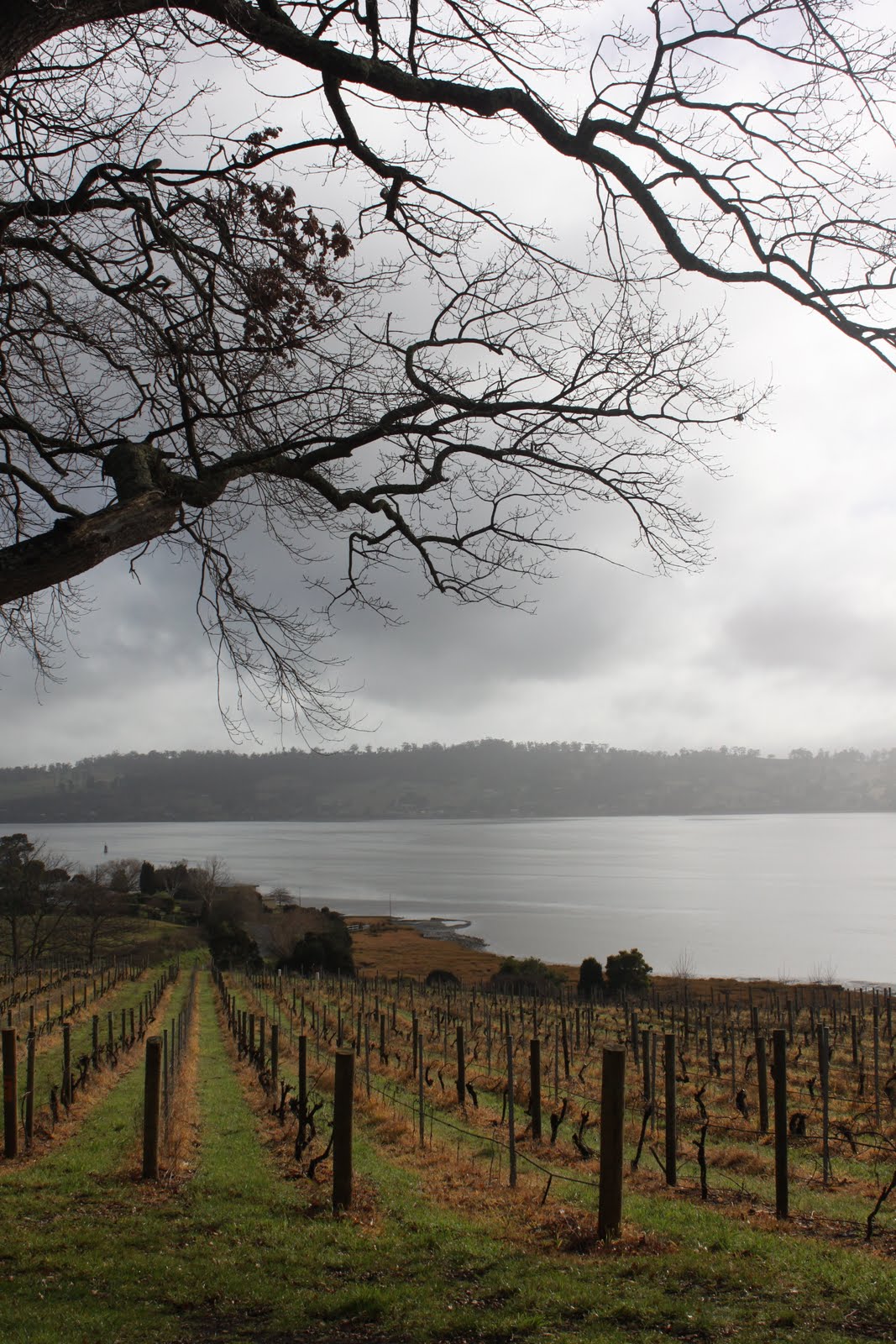
We decided to take our car over by ferry, which put us on the northern end of the island. For those of you unfamiliar with this part of the world, Tasmania is an Australian state located under the southeastern tip - it's on the same longitude as New Zealand, so we're talking lots of rain and semi-deciduous seasons as well as rainforests and nice beaches. Tasmania is known for its wilderness, but also for its produce and wines. So we decided to try and find some open wineries around Launceston - not ideal in winter. But we finally struck gold with Pipers Brook Winery, where we had some amazing whites and a pretty decent view.

We felt fancy, even though we were wearing raincoats.


And then we drove east to the Bay of Fires and camped out by the beach. This place was pure magic. The beaches are ringed with speckled boulders covered in bright red lichen, making them look like they've been stained with blood. As soon as we pulled up I was out of the car and taking these:

I don't actually know why the algae is red, but it lights up and glows when the sun falls on it. We set up camp in a bushy alcove and spent the night happily sitting by the fire eating sausages. There was a very brave wallaby who quite literally sat with us through dinner (and picked through our trash). They're notoriously shy, so this was a little weird. Especially when he sat creepily behind my chair and made scratchy noises, which I came him a talking to for. Not that he cared: he blinked at me and stayed where he was.


Then it was off into the historic center of the country for what we decided we needed: a little non-camping time. We stayed in the beautiful, tiny town of Ross in a heritage cottage:


It involved a log fire, a cute local tavern for dinners, and one of the oldest convict-built bridges in Tasmania. While the convict part's a little sad, the bridge itself is pretty impressive. At least Tasmania hasn't swept its colonial past under the underbrush like the rest of Australia, and I have to say I think it's better for it.

Then we wound through wilderness up into Cradle Mountain NP. We stayed at a pretty amazing Lodge were we got amazing massages, gourmet meals, and another log fire/king bed experience. But what we really went for was to hike through this:


This day of hiking was challenging, blissful, and the highlight of Tasmania for me. I couldn't believe I was finally standing on the Overland Track, the track I'd lusted after for so long. We even got to follow a wombat for a while, who was ambling down the boardwalk in front of us. The weather was kind to us, and as a result I had several of those moments of awe that you only get when surrounded by a natural setting so magnificent that you know you'll never be able to describe it. So I took lots of photos instead.

Tasmania is an amazing blend of good things: unspoiled wilderness, friendly people, sparkling coastline, good food and wine, and cosy country towns (to name a few).

It might be considered the end of the earth, but that only makes what you find there that much more outstanding.


August 17, 2011

Brisbane to Tas: the Epic Journey

I've been a terrible blogger. That's because I've been off adventuring in Tasmania and High Country Victoria for the past few weeks. We decided it would be fun and intrepid of us to drive from Brisbane down to Melbourne and take a ferry to Tasmania, camping all the way. And it was. It was a great opportunity to see the Australian landscape, but it involved an obscene amount of time in the car, which I wiled away by pointing Paul's iPhone at things (including one of the coolest wilderness events I've ever seen close up).

If this doesn't make you want to road trip with me, well... I just don't know about you.


June 13, 2011

Parallel Importation (Or: Why Are Books in Australia So Expensive?)


The high price of Australian books has baffled me since I first landed here. I can still remember my popped-eyed, open-mouthed dismay when I realized that the average price of a new, good quality paperback hovered around $32AUD. An A5-size, "cheap" trade paperback that would have cost me $14.95 in the U.S. cost me $23AUD. If you ask me, that seems a little bit outrageous. It's not that I don't think literature is worth a little extra. But when I had to say no to Tony Horwitz's new book ($60 in hardback), hop onto Amazon and order it from America (even with the shipping, it cost me less), I started getting a little angry. WHY in the world are books so expensive here?

You'd think after several Writing & Editing Masters-level courses and a lot of conversations with bookish friends, I'd get it. But it wasn't until I did some sleuthing on parallel import restriction (PIRs) that it all started falling into place. Parallel importation, as I understand it, is when a 'non-counterfeit' product is bought and brought into another country without the permission of the intellectual property owner. For example, most big magazines - for example, National Geographic - have individual branches in different countries that publish their own version of the mother product. For example, the U.S. publishes National Geographic, whereas Australia publishes its own version: National Geographic Australia. But some retailers will still import copies of the U.S. version and sell them, as well. Parallel import restrictions mean that Australian distributors can't buy a foreign (mother) version of a book if an Australian company has bought copyright and is already producing the book in Australia.

To look into the implications of PIRs I'll follow a particular book through the distribution process. Let's pretend that I just had a book published in the U.S. (Torn, let's say; it's good to be prepared). Foreign publishers will buy the rights to publish my book and will proceed to print and distribute it in their own country. In order for my book to be protected by PIRs, the Australian publisher who buys the rights needs to publish the 'Australian' copy of Torn within 30 days of its release in the U.S. and must have the capacity to reprint it within 90 days. If they don't, then Aussie retailers can buy Torn from an overseas market at a more competitive price and have it shipped in. These restrictions are meant to protect the Australian publishing industry, but a debate continues to rage about whether PIRs really do that, or whether they simply make book prices higher.

PIRs seem to mean a couple of things. First, it means that the Australian publishing industry is being protected. A free market without PIRs would mean that retailers could source books from overseas, which would inevitably undercut the industry at a local level. A lot of the profit from PIRs goes back to Australian authors and publishers, which is, of course, a wonderful thing. But it also means that PIRs help keep book prices in Australia high because they create a less competitive market. A recent study suggests that consumers in Australia are paying around 30% more for books than the rest of the world. Yikes. If Australia didn't have PIRs, then distributors could buy a shipment of books from another country on the cheap, bring them into Australia and sell them at a retail price somewhere between price A (the price they bought it for) and price B (standard Aussie pricing, including the GST). That kind of competition could mean lower prices for consumers - if local chains *ahemDymocks* could be persuaded to sell their books for less. But it could also devastate the Australian publishing industry.

I've heard a lot of Aussie authors get fairly upset about doing away with PIRs, and I can understand their worry. Many authors argue that chucking PIRs will silence Aussie voices both old and new. Because PIRs help ensure that Aussie publishers see the same kinds of profits from printing international favorites like Charlaine Harris's Sookie Stackhouse series as they do from Aussie up-and-comers, they're still willing to take chances on local talent. Local author Kim Wilkins makes great points about the many potential pitfalls that might come of axing PIRs, including the 'Americanization' of the Aussie industry: cheap books imported (well, because they're cheap) from the U.S., with an American cover and American spelling, that means a lesser product for the consumer, a smaller royalty for the author, and a lot less business for Aussie publishing.

The Australia Library & Information Association (ALIA), not a favorite with Aussie authors these days, found that local writers WOULD miss out on a certain amount of money if PIRs were done away with. But they also maintain that the people making the most out of PIRs are international authors, who reap much higher returns than local talent. That means that much of the book buyer's money flows right through the fingers of the Australian economy and straight overseas into other markets. But not as much as they might if PIRs were axed. Because in order for their to be an Australian publishing industry, there has to be money to support it. Otherwise everyone suffers, from writers to publishers to consumers.

I'm not sure where all this sits with me. One point rings out as clear as coins hitting the bottom of an empty jar, and that's the 'propositions' that the productivity commission proposed to help support the industry if PIRs are abolished. Most of their recommendations circle around 'providing grant funding' for writers. Okay, grants are all well and good, but that's a pretty vague and frustrating solution. And why oh WHY is it that writers have to fight that hard to make a living? Writers should be allowed to make money for their craft, just like any other job. They shouldn't have to beg and plead for the funding to be able to do what they do, especially if the demand for their stories is there.

One thing seems certain: book prices are too high. I'm sorry, but $60 for a hardback? No wonder we can't get people to read. I can only imagine how many people (myself included) are using Amazon and Book Depo to get books at a better rate, which can't be all that great for local industry. It sounds to me like PIRs aren't working as well as they could for both consumer and author. That said, I think protecting the industry is incredibly important. I'd hate to see the U.S. and U.K. market, rubbing their hands together and cackling, waiting to eat the little Aussie publishing world alive if there was nothing in place to protect it - because that's exactly what would happen. Protecting and serving authors and publishers means placing a value on cultural integrity, which inevitably means better quality for consumers and more opportunities for people like me.